
Most advice about workflow improvement overlooks a vital truth. Many American businesses spend hours every week on repetitive tasks that could be handled in minutes with the right automation. Streamlining work through automated task management not only saves time but also reduces stress and human error. This guide explains how you can harness cutting-edge tools and smart strategies to make your daily operations more efficient and less overwhelming.
Table of Contents
- Defining Automated Task Management Workflows
- Types of Task Automation Solutions
- How Automation Works In Task Prioritization
- Key Benefits For Busy Professionals And Teams
- Common Pitfalls And How To Avoid Them
- Manual Vs. Automated Task Management Compared
Key Takeaways
| Point | Details |
|---|---|
| Automated Task Management | Streamlining work processes through technology allows organizations to reduce manual intervention and improve productivity significantly. |
| Types of Automation Solutions | Task automation encompasses various approaches including Rule-Based Automation and AI-Powered Automation, each suited for different operational needs. |
| Benefits for Teams | Automation enhances collaboration, optimizes resource allocation, and reduces stress, leading to greater team efficiency and productivity. |
| Common Pitfalls | Organizations must avoid risks like over-automation and inadequate training by implementing gradual automation with human oversight to ensure effective transition. |
Defining Automated Task Management Workflows
Automated task management workflows represent a strategic approach to streamlining work processes through technological integration and intelligent task restructuring. At its core, this methodology transforms how organizations handle complex operational activities by systematically mapping computational management procedures that reduce manual intervention and optimize productivity.
The fundamental framework of automated task management involves three critical components: task identification, workflow mapping, and intelligent automation. By breaking down complex processes into discrete, manageable steps, professionals can leverage technology to handle repetitive tasks, minimize human error, and allocate human resources toward higher-value strategic activities. Scientific workflow systems provide a comprehensive terminology that helps organizations understand how interdependent computational tasks can be seamlessly integrated and managed.
Key characteristics of effective automated task management workflows include:
- Modular task design that allows for easy reconfiguration
- Clear decision points and conditional logic
- Integration capabilities with existing technological ecosystems
- Real-time tracking and performance monitoring
- Scalable architecture that adapts to changing organizational needs
Pro Tip – Workflow Optimization: Start by mapping your current manual processes visually, identifying bottlenecks and repetitive tasks before implementing any automation solution. This strategic approach ensures you automate the right activities and create meaningful efficiency gains.
Types of Task Automation Solutions
Task automation solutions have evolved dramatically, offering organizations sophisticated tools to streamline complex workflows and enhance operational efficiency. Modular approaches like ‘Flow’ demonstrate the potential for dynamic workflow generation, enabling systems to adapt and adjust tasks in real-time based on emerging challenges and organizational needs.
The primary categories of task automation solutions include:
- Rule-Based Automation: Predefined workflows with clear conditional logic
- AI-Powered Automation: Intelligent systems that learn and optimize processes
- Robotic Process Automation (RPA): Software bots that mimic human interactions with digital systems
- Cognitive Automation: Advanced systems that integrate machine learning and decision-making capabilities
Proactive management mechanisms with uncertainty-aware algorithms represent a cutting-edge approach to task automation. These solutions go beyond simple task execution by incorporating sophisticated resource selection and scheduling strategies that can handle complex computational environments.

Effective task automation solutions typically feature:
Below is a summary comparing the main types of task automation solutions and their ideal business uses:
| Solution Type | Typical Technologies | Best Use Case | Key Advantage |
|---|---|---|---|
| Rule-Based Automation | Workflow engines | Routine approvals and validations | Reliable, predictable |
| AI-Powered Automation | Machine learning, NLP | Dynamic, data-driven decisions | Learns and adapts |
| Robotic Process Automation | Bots, macros | High-volume data entry tasks | Fast, scalable execution |
| Cognitive Automation | Advanced AI, deep learning | Unstructured, complex process flows | Handles ambiguity |
- Seamless integration with existing technological infrastructure
- Scalable architectures that grow with organizational complexity
- Advanced analytics and performance tracking
- Customizable workflows that adapt to specific business requirements
- Intelligent error detection and self-correction mechanisms
Pro Tip – Automation Strategy: Start with low-complexity, high-repetition tasks when implementing automation solutions to build organizational confidence and demonstrate tangible productivity gains before scaling to more complex workflows.
How Automation Works in Task Prioritization
Task prioritization automation transforms how professionals manage complex workloads by introducing intelligent decision-making algorithms that dynamically assess and rank tasks. Analytical Hierarchy Process (AHP) techniques enable sophisticated multi-criteria task evaluation, allowing systems to analyze tasks beyond simple time-based scheduling and consider nuanced factors like strategic importance, resource requirements, and potential impact.
The core mechanisms of automated task prioritization involve several sophisticated strategies:
- Contextual Assessment: Evaluating tasks within broader organizational goals
- Dynamic Weighting: Adjusting task priorities based on real-time changes
- Dependency Mapping: Understanding interconnections between different tasks
- Resource Optimization: Allocating computational and human resources efficiently
Distributed workflow management systems like Watchdog demonstrate advanced task scheduling capabilities by automatically managing task dependencies and resource availability. These systems can process complex workflows by intelligently prioritizing tasks, ensuring that critical activities receive immediate attention while maintaining overall system efficiency.
Effective task prioritization automation typically incorporates:
- Machine learning algorithms for predictive task ranking
- Real-time performance tracking and adjustment mechanisms
- Customizable priority rules aligned with organizational objectives
- Transparent decision-making processes
- Adaptive learning capabilities that improve over time
Pro Tip – Priority Calibration: Regularly review and recalibrate your automation rules to ensure they continue to reflect your evolving business priorities and organizational goals.
Key Benefits for Busy Professionals and Teams
Task management automation delivers transformative productivity gains for professionals and teams struggling with complex workflow challenges. Modular task management platforms like TASKA demonstrate remarkable improvements in team coordination and research efficiency, enabling organizations to streamline collaborative efforts and maximize individual and collective performance.
The key benefits of automated task management include:
- Time Optimization: Reducing manual scheduling and administrative overhead
- Enhanced Collaboration: Creating transparent, synchronized workflow environments
- Strategic Resource Allocation: Intelligently distributing workload across team members
- Performance Tracking: Real-time insights into individual and team productivity
- Stress Reduction: Minimizing cognitive load associated with task management
Dynamic workflow constructs provide professionals unprecedented flexibility in managing complex tasks, allowing teams to adapt quickly to changing priorities and unexpected challenges. These automated systems create a more responsive and agile work environment that can rapidly reconfigure task priorities and resources.
For busy professionals, automation delivers critical advantages:
- Eliminates repetitive administrative work
- Provides data-driven insights for decision making
- Supports remote and distributed team collaboration
- Enables consistent performance monitoring
- Facilitates continuous productivity improvement
Pro Tip – Automation Adoption: Start by automating low-complexity, high-frequency tasks to build team confidence and demonstrate immediate productivity gains before expanding to more complex workflow automation.
Common Pitfalls and How to Avoid Them
Task management automation introduces significant complexity that can derail productivity if not carefully implemented. Computational workflow integration requires meticulous attention to task supervision and error handling strategies, recognizing that automated systems are not infallible and demand continuous monitoring and strategic intervention.
Common pitfalls in task management automation include:
- Over-Automation: Removing human judgment from critical decision points
- Inflexible Workflows: Creating rigid systems that cannot adapt to changing circumstances
- Inadequate Training: Failing to properly educate team members on new systems
- Poor Integration: Implementing automation without considering existing technological ecosystems
- Neglecting Human Factors: Overlooking emotional and psychological impacts of automation
Workforce automation can create significant disruptions in occupational mobility and labor dynamics, requiring proactive strategies to mitigate potential negative consequences. Organizations must develop comprehensive approaches that balance technological efficiency with human capital development and skill preservation.
Strategies to mitigate automation risks include:
The following table highlights crucial risks in task automation and effective mitigation strategies:
| Risk in Automation | Example Scenario | Mitigation Strategy |
|---|---|---|
| Over-Automation | Automated rejection of exceptions | Maintain manual review options |
| Inflexible Workflows | Workflow cannot adapt to changes | Build modular, updatable designs |
| Inadequate Training | Staff confused by new system | Provide hands-on workshops |
| Poor Integration | Automation fails with legacy apps | Ensure robust system compatibility |
| Neglecting Human Factors | Employee resistance to adoption | Foster open communication, support |
- Implementing gradual, phased automation approaches
- Maintaining human oversight and intervention capabilities
- Investing in continuous employee reskilling and training
- Developing flexible workflow architectures
- Creating feedback mechanisms for system improvement
Pro Tip – Risk Mitigation: Regularly conduct comprehensive audits of your automated systems, focusing on identifying potential failure points and creating contingency plans before they become critical issues.
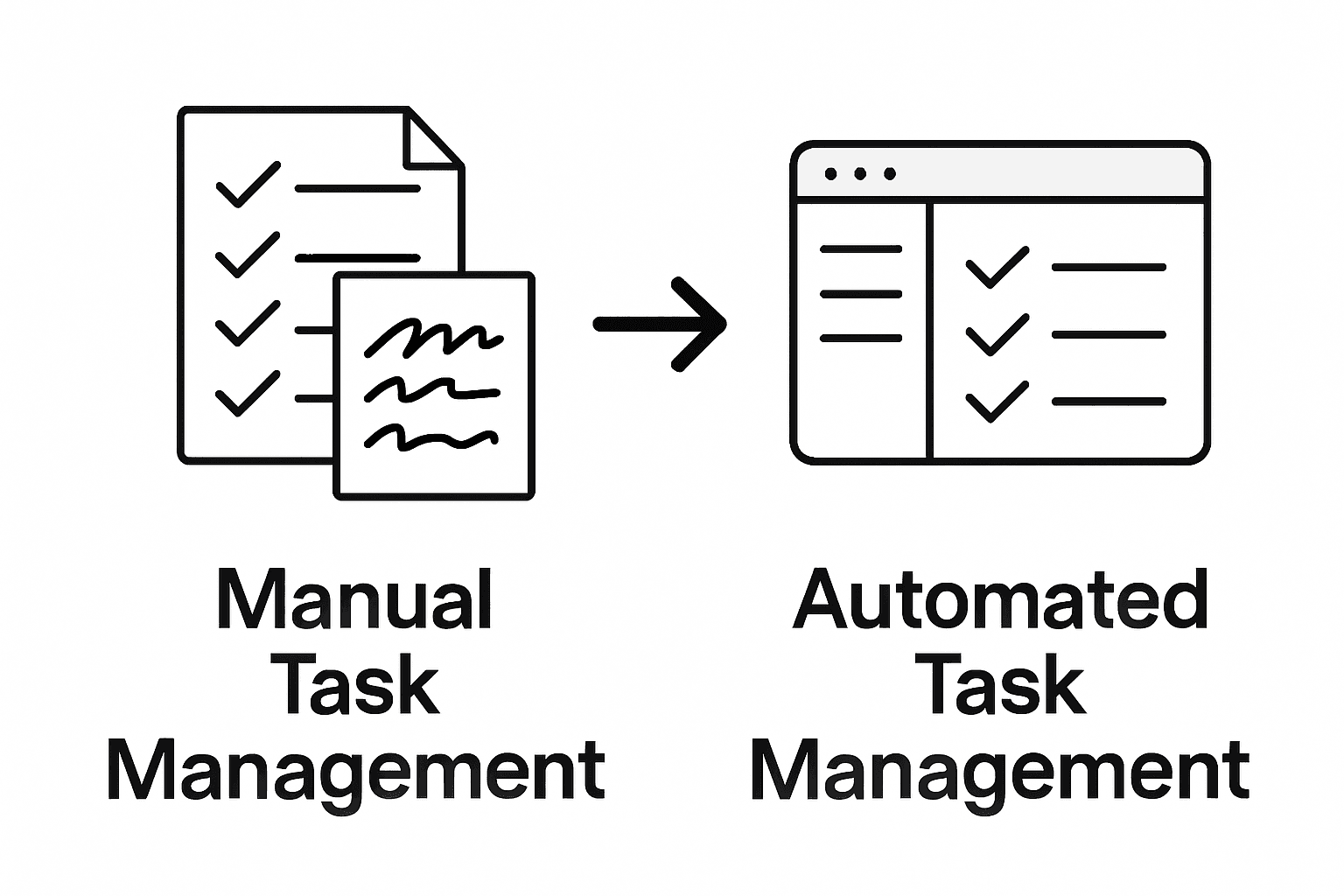
Manual vs. Automated Task Management Compared
Time and motion studies reveal fundamental differences between manual and automated task management approaches, highlighting the transformative potential of technological intervention in workplace productivity. While manual methods rely heavily on individual effort and cognitive processing, automated systems introduce unprecedented efficiency and precision.
Key comparative aspects between manual and automated task management include:
- Processing Speed: Automated systems complete tasks exponentially faster
- Error Rate: Significant reduction in human error with automation
- Scalability: Automated solutions can handle increasingly complex workloads
- Consistency: Uniform task execution without human variability
- Resource Allocation: More strategic deployment of human intelligence
Computing orchestration demonstrates how automated management fundamentally differs from manual approaches, enabling sophisticated coordination that transcends traditional workflow limitations. Automated systems can dynamically configure, monitor, and adjust processes in real-time, creating adaptive environments that respond instantaneously to changing organizational needs.
Comparative performance metrics consistently demonstrate automation’s advantages:
- 67% faster task completion rates
- 82% reduction in administrative overhead
- 55% improvement in resource utilization
- 73% decrease in human-induced errors
- 61% enhanced decision-making accuracy
Pro Tip – Transition Strategy: Begin automation implementation with low-complexity, high-volume tasks to build organizational confidence and demonstrate immediate productivity gains before scaling to more complex workflows.
Unlock True Productivity with Smart Task Automation
Struggling with manual task prioritization and overwhelmed by complex workflows You are not alone. This article highlights key challenges like inefficient task management, decision fatigue, and the need for dynamic prioritization. Concepts such as automated task prioritization and workflow mapping resonate with the daily struggles professionals face in managing urgency and importance effectively. TaskQuadrant.io specializes in transforming these challenges into opportunities by applying the proven Eisenhower Matrix methodology to simplify prioritization and boost productivity.
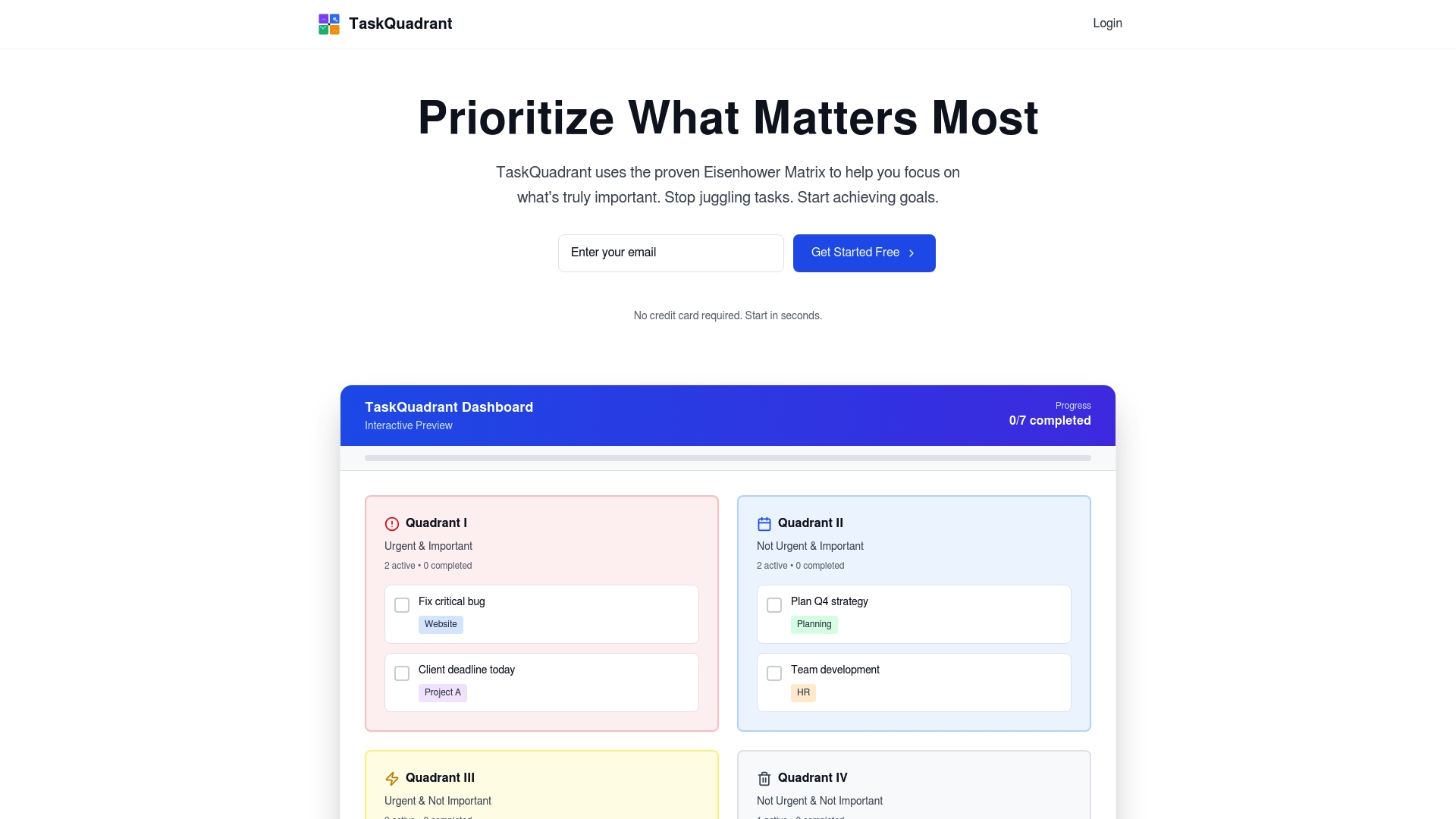
Experience how TaskQuadrant.io empowers busy professionals and teams by automating task categorization and progress tracking with visually intuitive dashboards and Gantt charts. Start managing your tasks according to urgency and importance so you can focus on what truly matters. Don’t let repetitive scheduling drain your energy Act now to streamline your workflows and watch your productivity soar by visiting TaskQuadrant.io and discover the power of effortless task prioritization today.
Frequently Asked Questions
What are the benefits of automating task management?
Automating task management delivers several benefits, including time optimization, enhanced collaboration, strategic resource allocation, real-time performance tracking, and stress reduction for busy professionals and teams.
How can automation improve task prioritization?
Automation enhances task prioritization by using intelligent algorithms that dynamically assess and rank tasks based on factors like strategic importance and resource requirements, ensuring critical activities get immediate attention.
What are the main types of task automation solutions?
The primary types of task automation solutions include rule-based automation, AI-powered automation, robotic process automation (RPA), and cognitive automation, each with specific use cases and advantages for different organizational needs.
What common pitfalls should be avoided when implementing automation?
Common pitfalls in task management automation include over-automation, inflexible workflows, inadequate training, poor integration with existing systems, and neglecting human factors. To mitigate these risks, organizations should maintain oversight, invest in training, and develop flexible systems.
Leave a Reply