
Most American teams find that poorly defined project goals can derail even the best intentions, with studies showing nearly 40 percent of projects fail because of unclear objectives. Setting strong foundations matters whether you are leading a nonprofit group or tackling a corporate assignment. This guide walks you through each step to help transform scattered ideas into a clear project timeline, from defining deliverables to validating your plan for real-world success.
Table of Contents
- Step 1: Define Project Goals And Deliverables
- Step 2: Break Down Tasks And Set Dependencies
- Step 3: Input Tasks Into Your Timeline Tool
- Step 4: Assign Deadlines And Responsible Parties
- Step 5: Visualize And Review Your Project Timeline
- Step 6: Adjust And Validate Your Timeline For Accuracy
Quick Summary
| Key Insight | Explanation |
|---|---|
| 1. Define clear project goals | Articulate specific objectives to guide your project and ensure measurable outcomes align with stakeholder expectations. |
| 2. Break tasks into manageable parts | Decompose project goals into actionable tasks with defined sequences and dependencies for effective project completion. |
| 3. Use timeline tools effectively | Input tasks into a timeline tool for a visual representation that facilitates project tracking and team coordination. |
| 4. Assign responsibilities and deadlines | Clearly delegate tasks to team members with realistic deadlines to ensure accountability and reduce ambiguity. |
| 5. Validate and adjust your timeline | Regularly review and refine your project timeline based on team feedback and performance metrics to enhance flexibility. |
Step 1: Define project goals and deliverables
Defining your project goals and deliverables is like creating a roadmap that guides your entire project journey. In this critical first step, you’ll transform vague ideas into concrete, actionable objectives that provide clear direction and measurable outcomes.
Start by articulating your project’s core purpose. What specific problem are you solving? Who will benefit from this project? Effective project management requires objectives that are specific, measurable, achievable, relevant, and time-bound. Break down your overarching goal into smaller, tangible deliverables that represent milestones along your project path. Each deliverable should have a clear output something you can point to and say “this is completed.”
To craft robust project goals, engage with key stakeholders and gather their perspectives. Document their expectations, potential challenges, and desired outcomes. This collaborative approach ensures your goals are comprehensive and aligned with broader organizational objectives. Map out specific metrics that will demonstrate success, whether those are financial targets, performance improvements, or quality benchmarks.
Pro Tip: Create a one-page project charter that succinctly captures your goals, deliverables, and success criteria. This document becomes your project’s north star, keeping everyone focused and aligned throughout the implementation process.
Step 2: Break down tasks and set dependencies
Breaking down your project into manageable tasks and understanding their interconnections is like creating a strategic puzzle where each piece must fit precisely. This step transforms your broad project goals into actionable, sequenced components that will guide your team toward successful completion.
Structured Complex Task Decomposition involves systematically parsing large objectives into granular, executable tasks with clear temporal relationships. Start by listing every possible task required to achieve your project goals. Be thorough and specific. Consider both major milestones and smaller subtasks that support those larger objectives. As you break down tasks, identify their dependencies identify which tasks must be completed before others can begin. Some tasks will be sequential requiring completion in a specific order while others can be performed simultaneously.
When mapping task dependencies, visualize your project timeline like an intricate network. Understanding task interdependencies helps coordinate team efforts and anticipate potential bottlenecks. Use visual tools like Gantt charts or workflow diagrams to illustrate these connections. Assign realistic time estimates for each task, considering potential complexities and buffer time for unexpected challenges. Communicate these dependencies clearly with your team to ensure everyone understands how their individual responsibilities connect to the broader project objectives.
Pro Tip: Create a color-coded task dependency matrix that highlights critical path tasks and potential scheduling risks. This visual tool will help you quickly identify which tasks are most crucial to your project’s timeline and where potential delays might occur.
Step 3: Input tasks into your timeline tool
Inputting tasks into your timeline tool transforms your carefully crafted task list into a visual roadmap that brings your project strategy to life. This crucial step converts abstract planning into a concrete, actionable blueprint that will guide your team through project execution.
Start by selecting a timeline tool that matches your project complexity. Most project management platforms allow you to input tasks with specific details like start dates, end dates, assigned team members, and priority levels. Begin by entering each task systematically using the task list you developed earlier. Pay special attention to the sequence and dependencies you previously identified. Some tools offer drag and drop functionality that makes arranging tasks intuitive and flexible.

As you populate your timeline, verify each task’s details meticulously. Double check start and end dates, ensure task descriptions are clear and concise, and confirm team member assignments. Use the tool’s features to color code tasks by status or priority. Add notes or attachments to provide additional context where necessary. Many modern timeline tools offer task visualization features that help teams quickly understand project flow and potential bottlenecks.
Pro Tip: Create a quick validation checkpoint by reviewing your entire timeline from start to finish. Look for any tasks with unrealistic timelines or potential scheduling conflicts before finalizing your project plan.
Step 4: Assign deadlines and responsible parties
Assigning deadlines and responsible parties transforms your project timeline from a theoretical plan into a concrete execution strategy. This critical step ensures every task has a clear owner and a specific completion timeframe, preventing ambiguity and driving accountability across your team.
Effective project management requires precise delegation and time management strategies that clearly define individual responsibilities. Begin by matching each task with team members who have the right skills and capacity. Consider not just technical capabilities but also current workload and individual strengths. When assigning responsibilities, have direct conversations with each team member to confirm their understanding and commitment. Discuss not just the task itself but the broader context of how their work contributes to project success.
As you assign deadlines, build in realistic buffer time for potential complications. Not every task will go exactly according to plan, so incorporate flexibility into your timeline. Communicate deadlines clearly and document them in your project management tool, ensuring every team member can see their specific responsibilities and target completion dates. Consider using collaborative task management tools that enable real time tracking and updates to keep everyone aligned and informed.
Pro Tip: Schedule a brief kickoff meeting where you walk through the entire project timeline, explicitly confirming each person’s tasks and deadlines. This proactive approach prevents misunderstandings and creates a shared sense of ownership.
Step 5: Visualize and review your project timeline
Visualizing and reviewing your project timeline transforms complex planning into a clear, actionable roadmap that illuminates every project detail. This critical step allows you to validate your project strategy, identify potential bottlenecks, and ensure all team members have a comprehensive understanding of the project flow.
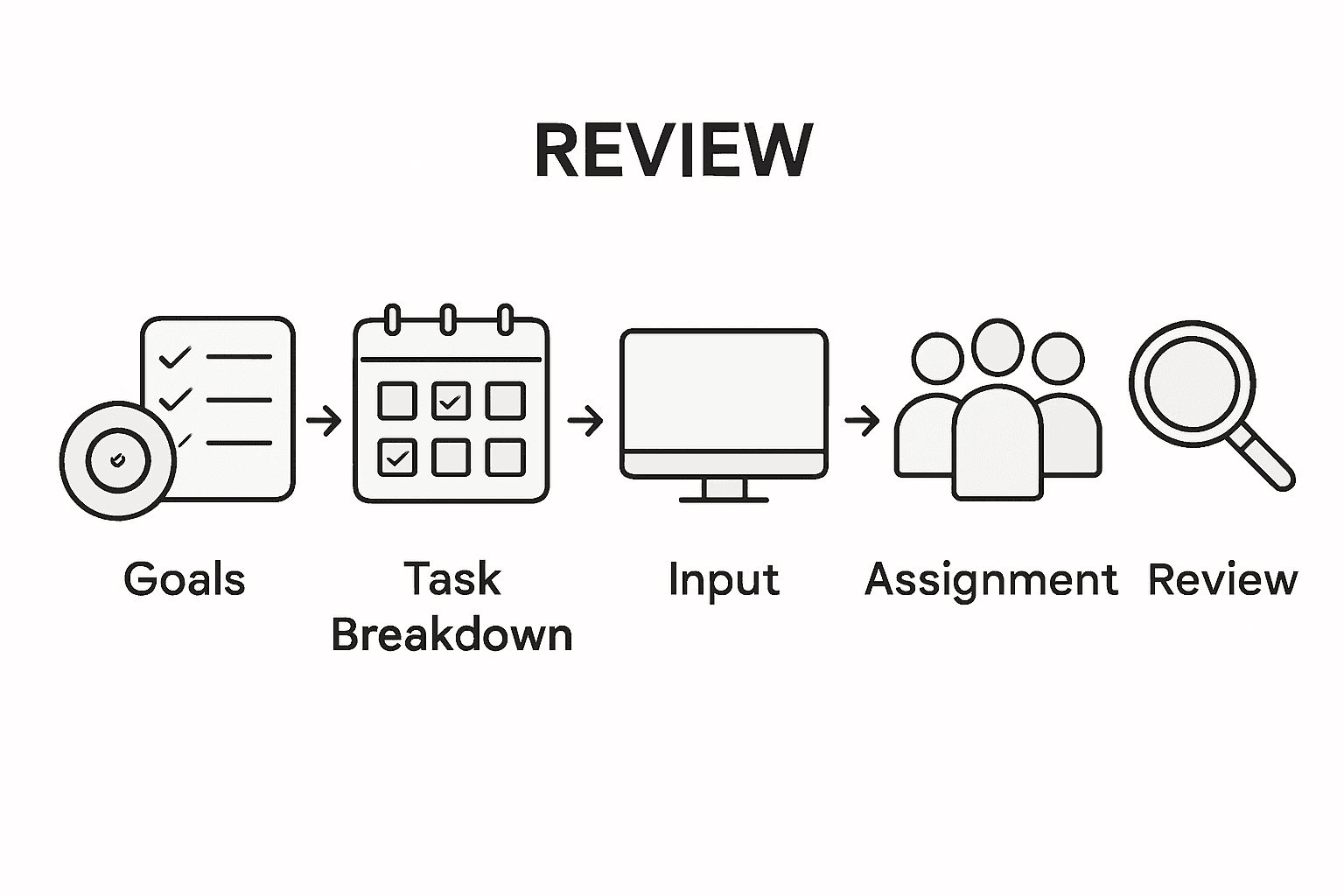
Start by generating a comprehensive visual representation of your timeline. Most project management tools offer multiple visualization options like Gantt charts, Kanban boards, or timeline views. Professional task management platforms can help you create intuitive project visualizations that make understanding project progression simple. Zoom out to view the entire project arc and then zoom in to examine individual task details. Look for potential scheduling conflicts, unrealistic time allocations, or tasks with unclear dependencies.
During your review, assess each project phase critically. Check that task sequences make logical sense, resources are appropriately allocated, and buffer times are realistic. Identify any tasks that appear overly complex or potentially risky. Consider running a brief scenario analysis where you imagine potential disruptions and assess how your current timeline might absorb unexpected challenges. Engage your team in this review process and welcome their perspectives on timeline feasibility and potential improvements.
Pro Tip: Create a color coded risk assessment overlay on your timeline that highlights high risk tasks or potential bottlenecks, allowing you to quickly visualize areas that might require extra attention or contingency planning.
The table below explains popular timeline visualization tools and their business benefits:
| Timeline Tool | Key Features | Business Benefit |
|---|---|---|
| Gantt Chart | Visualizes dependencies and dates | Improves scheduling clarity |
| Kanban Board | Tracks workflow using columns | Increases team transparency |
| Timeline View | Linear display of milestones | Simplifies project tracking |
| Task Matrix | Maps responsibility vs. task | Promotes accountability |
Step 6: Adjust and validate your timeline for accuracy
Adjusting and validating your project timeline is the critical final checkpoint that transforms your theoretical plan into a robust, executable strategy. This essential phase allows you to stress test your project roadmap and ensure its practical feasibility before actual implementation begins.
Begin your validation process by conducting a comprehensive review with key stakeholders. Professional project management tools can help you create detailed scenario analyses that reveal potential scheduling conflicts or resource constraints. Scrutinize each task and its allocated timeframe with a critical eye. Look for unrealistic time estimates, potential bottlenecks, or dependencies that might create unexpected delays. Invite team members to provide candid feedback about the timeline’s practicality based on their expertise and past project experiences.
As you review, be prepared to make strategic adjustments. Redistribute tasks if certain team members appear overloaded, reallocate buffer times based on task complexity, and recalibrate dependencies that seem too rigid. Consider running multiple timeline simulations that account for different potential scenarios unexpected team member absences, potential technical challenges, or external market shifts. The goal is not to create a perfect timeline but a flexible, resilient project plan that can adapt to real world complexities.
Pro Tip: Implement a quarterly timeline review process where you reassess your project plan against actual progress. This proactive approach allows continuous refinement and keeps your project strategy agile and responsive.
Here’s a summary of each key project planning step and its main objective:
| Step | Main Objective | Typical Outcome |
|---|---|---|
| Define goals and deliverables | Clarify purpose and expected results | Project charter created |
| Break down tasks and set dependencies | Organize tasks in a logical order | Task network established |
| Input tasks into your timeline tool | Visualize project schedule | Actionable project roadmap |
| Assign deadlines and responsible parties | Ensure ownership and accountability | Team assignments documented |
| Visualize and review your timeline | Identify bottlenecks and conflicts | Risks made visible |
| Adjust and validate your timeline | Confirm feasibility and flexibility | Refined execution plan |
Streamline Your Project Timeline with TaskQuadrant.io
Creating a clear and effective project timeline can feel overwhelming when juggling detailed task dependencies, deadlines, and team assignments as outlined in “Step-by-Step Project Timeline Creation for Professionals.” Common challenges include breaking down complex tasks, visualizing schedules clearly, and ensuring accountability among team members. TaskQuadrant.io addresses these pain points by offering intuitive project timeline visualization through Gantt charts, empowering you to manage tasks, set priorities using the Eisenhower Matrix, and track progress in one seamless platform. By simplifying task input and automatic categorization, you reduce decision fatigue and keep your team aligned with no complex setup required.
Ready to transform your project planning process and avoid common pitfalls?
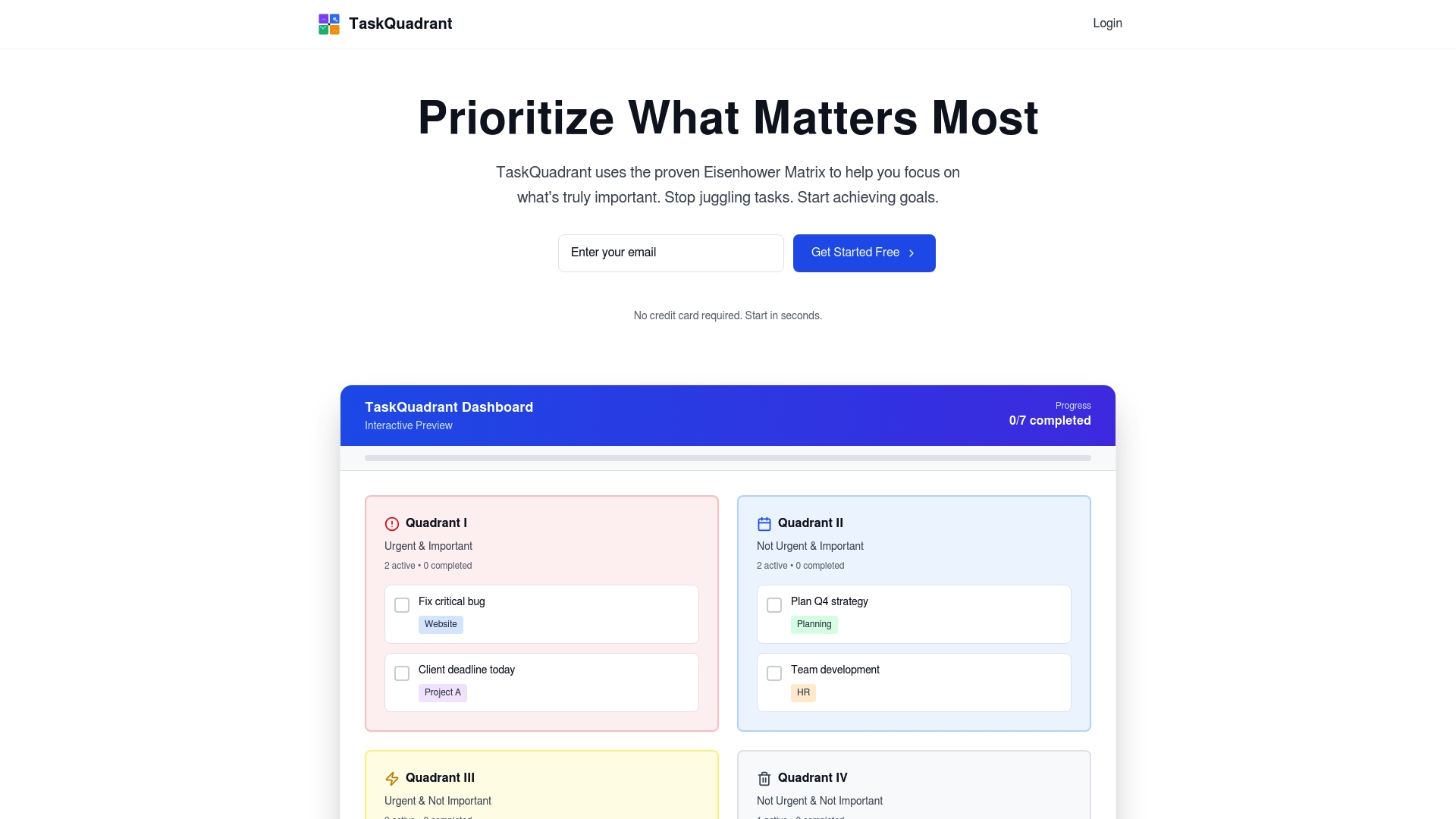
Experience firsthand how TaskQuadrant.io helps professionals like you clarify deliverables, assign responsibilities, and validate timelines with ease. Take control of your projects today and start achieving your goals efficiently by visiting TaskQuadrant.io. Then dive deeper into how our project timeline visualization capabilities can optimize your workflow and boost team productivity.
Frequently Asked Questions
How do I define project goals and deliverables?
To define project goals and deliverables, start by clarifying the core purpose of your project and identifying who will benefit from it. Break down your overall goal into smaller, actionable deliverables that represent milestones, then document this in a project charter for clear guidance throughout your project.
What is the best way to break down tasks and set dependencies?
Break down tasks by listing every necessary component required to achieve your project goals, detailing both major milestones and subtasks. Identify and map out task dependencies to determine the order of execution, ensuring clarity in how tasks interconnect and impact timelines.
How can I effectively input tasks into my timeline tool?
To input tasks into your timeline tool, select one that suits your project’s complexity and systematically enter each task with relevant details like start and end dates, and assigned team members. Take care to verify the sequence and dependencies of tasks while utilizing features like drag and drop for better organization.
What steps should I take to assign deadlines and responsible parties?
When assigning deadlines and responsibilities, match each task with team members who possess the right skills and ensure they understand their roles. Set realistic deadlines, incorporating buffer time for unexpected challenges, and document these assignments in your project management tool to enhance accountability.
How do I visualize and review my project timeline?
Visualize your project timeline by generating comprehensive representations such as Gantt charts or Kanban boards. Review the timeline critically to identify potential bottlenecks, schedule conflicts, and ensure task sequences are logical by engaging your team in this assessment process.
What adjustments should I make to validate my timeline for accuracy?
To validate your timeline, conduct a detailed review with key stakeholders and scrutinize each task’s timeframe for realism. Be prepared to make adjustments, like redistributing tasks or reallocating buffer time, to ensure the final project plan is flexible and adaptable to unforeseen complications.
Recommended
- TaskQuadrant – Professional Task Management with Eisenhower Matrix
- TaskQuadrant Landing – Eisenhower Matrix Task Management
- TaskQuadrant Features – Eisenhower Matrix, Projects & Analytics
- Manpower Calculator – Estimate Project Resources & Hours
- The Essential Guide to Professional WordPress Website (2025) – WPCTO
- Effective Sales Manager Workflow for Predictable B2B Growth
Leave a Reply