
Over 60 percent of American professionals say recurring tasks are the secret weapon behind their daily productivity. With packed schedules and constant project demands, missing a key routine can quickly throw off an entire workflow. Understanding how recurring tasks work in modern productivity platforms saves time and mental energy, helping American teams transform repetitive work into manageable, reliable systems that keep projects moving smoothly.
Table of Contents
- Defining Recurring Tasks In Productivity Platforms
- Types Of Recurring Tasks And Key Variations
- How Recurring Task Automation Works
- Role Of Recurring Tasks In Professional Workflows
- Common Pitfalls And How To Avoid Them
Key Takeaways
| Point | Details |
|---|---|
| Understanding Recurring Tasks | Recurring tasks automate routine work, enabling professionals to focus more on strategic execution than on repetitive scheduling. |
| Types of Recurring Tasks | Fixed-interval, flexible-schedule, and context-dependent tasks serve different organizational needs, each offering unique benefits. |
| Automation Benefits | Intelligent automation streamlines workflows by dynamically adjusting task parameters, ensuring efficiency and relevance. |
| Avoiding Pitfalls | Regular audits and maintenance prevent over-automation and task fatigue, ensuring tasks align with organizational goals and retain their value. |
Defining Recurring Tasks in Productivity Platforms
Productivity platforms recognize recurring tasks as systematic activities scheduled to repeat at consistent intervals, transforming routine work into predictable, automated processes. These tasks represent critical workflow elements that require regular execution without manual rescheduling. For professionals managing complex projects, understanding the mechanics of recurring task management becomes essential for maintaining operational consistency.
At their core, recurring tasks are predefined work items programmed to automatically reappear according to specific time-based patterns. These can range from daily check-ins and weekly team meetings to monthly financial reconciliations or quarterly performance reviews. Unlike one-time tasks, recurring tasks eliminate the mental load of manually recreating identical assignments, allowing professionals to focus their cognitive energy on strategic execution rather than administrative overhead.
Modern productivity platforms offer sophisticated recurring task configurations that adapt to diverse organizational needs. Users can typically customize recurrence patterns with granular controls – selecting exact frequencies like every 3 days, specific weekdays, or complex schedules like “third Thursday of each month.” Advanced systems integrate intelligent features that automatically adjust for holidays, track completion status, and provide visual progress indicators, transforming repetitive work into streamlined, manageable workflows.
Pro Tip: Smart Recurring Task Strategy: Design recurring tasks with built-in flexibility by setting reasonable completion windows and establishing clear ownership to prevent task accumulation and potential workflow bottlenecks.
Types of Recurring Tasks and Key Variations
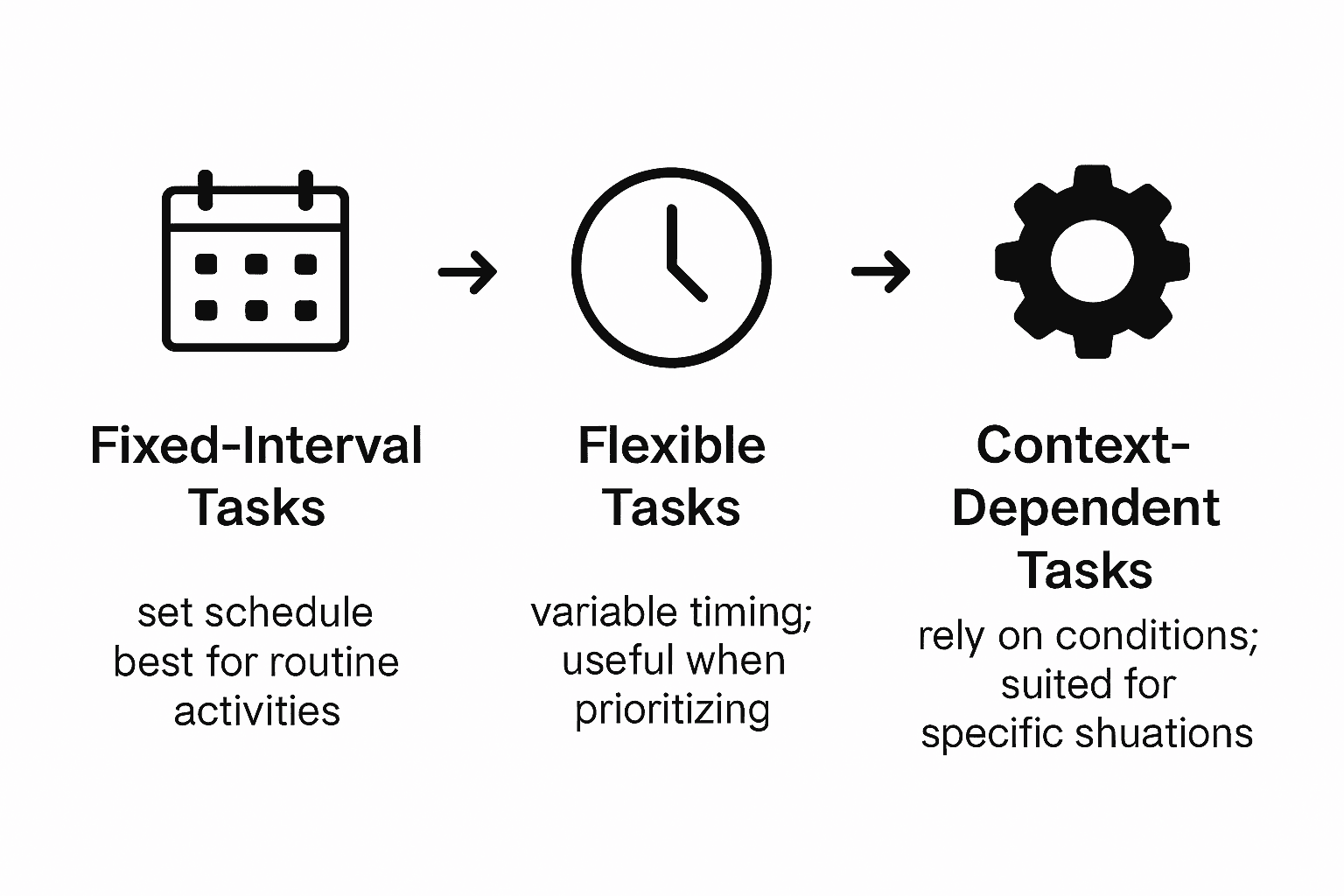
Recurring tasks manifest in diverse patterns, each serving unique organizational and personal productivity needs. These variations range from simple time-based repetitions to complex, conditional recurrence models that adapt to specific workflow requirements. The primary categories include fixed-interval tasks, flexible-schedule tasks, and context-dependent recurring assignments, each offering distinct advantages for different work environments.
Fixed-interval recurring tasks represent the most straightforward type, executing at predictable and consistent time frames. These include daily morning team check-ins, weekly project status reports, monthly financial reviews, and quarterly performance evaluations. Such tasks follow a rigid schedule, making them ideal for standardized processes that require absolute regularity. In contrast, flexible-schedule recurring tasks provide more adaptability, allowing slight variations in timing while maintaining the core periodic nature. TaskQuadrant features enable professionals to customize these recurring assignments with nuanced scheduling options that accommodate real-world complexity.

Context-dependent recurring tasks represent the most sophisticated variation, where task recurrence depends on specific conditions or previous task completion. These intelligent tasks might trigger based on project milestones, workload capacity, or external dependencies. For instance, a follow-up task might automatically schedule itself after the completion of a preceding assignment, or a maintenance check could recur only after certain performance metrics are met. This dynamic approach ensures that recurring tasks remain responsive to evolving organizational needs, preventing unnecessary administrative overhead and maintaining workflow efficiency.
Pro Tip: Recurring Task Optimization: Regularly audit and refine your recurring task configurations, removing or adjusting tasks that no longer align with current project goals or organizational priorities to maintain lean and effective workflow management.
Here’s a comparison of key recurring task types and when to use them:
| Task Type | Defining Characteristic | Best Use Case |
|---|---|---|
| Fixed-Interval | Same schedule every cycle | Standard reports or check-ins |
| Flexible-Schedule | Adjustable timing within limits | Projects with shifting deadlines |
| Context-Dependent | Triggered by conditions | Tasks linked to milestones |
How Recurring Task Automation Works
Recurring task automation represents a sophisticated technological approach to streamlining repetitive work processes by leveraging intelligent software mechanisms. At its core, this automation relies on predefined rules and algorithmic configurations that enable tasks to regenerate automatically without manual intervention. The underlying system uses complex scheduling engines that can interpret multiple parameters, including time intervals, task dependencies, completion status, and contextual triggers.
The automation process typically follows a structured workflow with several key components. First, users define the initial task parameters, specifying exact recurrence patterns such as daily, weekly, monthly, or custom intervals. Advanced task management platforms integrate intelligent algorithms that can adapt these recurring tasks based on real-time project conditions. These systems can automatically adjust scheduling, reassign responsibilities, and track completion rates, transforming routine work into a seamless, self-managing ecosystem.
Modern recurring task automation goes beyond simple time-based repetition, incorporating sophisticated conditional logic and intelligent routing mechanisms. These advanced systems can trigger tasks based on complex conditions like project milestones, workload capacity, team member availability, or specific performance metrics. For instance, a follow-up task might automatically generate only after its predecessor is completed, or a maintenance check could be scheduled contingent upon specific operational thresholds being met. This dynamic approach ensures that recurring tasks remain responsive and contextually relevant, preventing unnecessary administrative overhead and maintaining organizational agility.
Pro Tip: Automation Calibration: Periodically review and fine-tune your automated task rules, ensuring they remain aligned with evolving project goals and organizational workflows to maximize efficiency and prevent potential system rigidity.
The table below summarizes recurring task automation features and their business benefits:
| Automation Feature | What It Does | Business Benefit |
|---|---|---|
| Intelligent Scheduling | Automatically adjusts task timing | Reduces manual rescheduling |
| Completion Tracking | Monitors task progress | Improves accountability and visibility |
| Conditional Triggers | Activates based on set conditions | Ensures task relevance and timeliness |
Role of Recurring Tasks in Professional Workflows
Recurring tasks function as the critical structural backbone of professional workflows, providing systematic consistency and predictability in complex organizational environments. These structured assignments create a rhythm of productivity that transforms sporadic, unpredictable work patterns into reliable, repeatable processes. By establishing clear expectations and standardized execution mechanisms, recurring tasks enable teams to maintain operational momentum and reduce cognitive overhead associated with constant task recreation and scheduling.
Professional workflows leverage recurring tasks across multiple dimensions of organizational function. In project management, they ensure critical checkpoints like status reporting, resource allocation reviews, and milestone tracking happen consistently. For administrative processes, recurring tasks manage essential activities such as financial reconciliations, compliance documentation, and performance evaluations. TaskQuadrant professional task management platforms demonstrate how these automated workflows can seamlessly integrate recurring assignments across different operational domains, creating a synchronized and efficient work ecosystem.
Beyond mere scheduling, recurring tasks play a strategic role in performance optimization and organizational learning. They create predictable data collection points that allow teams to track progress, identify bottlenecks, and continuously refine workflow efficiency. Complex recurring task frameworks enable dynamic adaptation, where task parameters can evolve based on historical performance metrics, team capacity, and changing strategic objectives. This intelligent approach transforms recurring tasks from simple administrative tools into sophisticated mechanisms for continuous improvement and organizational agility.
Pro Tip: Workflow Calibration: Conduct quarterly audits of your recurring task configurations, examining their alignment with current organizational goals and removing or modifying tasks that no longer contribute meaningful value to your operational processes.
Common Pitfalls and How to Avoid Them
Recurring task management presents numerous potential challenges that can undermine productivity and organizational efficiency. One primary pitfall involves over-automation, where teams create so many recurring tasks that they become overwhelmed by administrative complexity. This phenomenon leads to task fatigue, where team members start ignoring or mechanically completing tasks without meaningful engagement, effectively neutralizing the potential benefits of systematic workflow management.
Another critical challenge emerges from inadequate task configuration and maintenance. Recurring tasks require periodic review and refinement to remain relevant and valuable. TaskQuadrant professional task management emphasizes the importance of dynamic task parameters that can adapt to changing organizational needs. Common configuration mistakes include setting overly rigid recurrence patterns, failing to assign clear ownership, and neglecting to establish meaningful completion criteria. These errors can transform potentially useful recurring tasks into bureaucratic exercises that consume time without generating substantive value.
The most sophisticated recurring task strategies recognize the delicate balance between structured consistency and adaptive flexibility. Professionals must develop nuanced approaches that allow for intelligent task modification, contextual understanding, and periodic reassessment. Potential risks include creating tasks that become disconnected from strategic objectives, generating redundant work, or establishing workflows that generate more administrative overhead than they eliminate. Successful recurring task management requires a holistic approach that continuously evaluates task utility, team capacity, and alignment with broader organizational goals.
Pro Tip: Task Maintenance Strategy: Implement a quarterly recurring task audit where you systematically review, consolidate, and streamline your existing task configurations, ensuring each assignment remains purposeful and directly contributes to organizational productivity.
Maximize Productivity with Smart Recurring Task Automation
Recurring tasks can create frustration when they become overwhelming or lose relevance because of poor management. The challenge is clear: how do you maintain consistent workflow momentum without drowning in administrative overload or task fatigue? This article highlights the importance of thoughtful recurring task configuration and continuous refinement as key to sustaining productivity and operational agility.
At TaskQuadrant.io, we understand these pain points deeply. Our platform offers advanced yet simple solutions for recurring task automation that adapt intelligently to your project’s needs. By integrating features like automated scheduling, conditional triggers, and intuitive progress tracking, TaskQuadrant empowers teams and professionals to focus on what matters most rather than getting stuck in repetitive manual updates. Experience the seamless merging of Eisenhower Matrix prioritization with dynamic task automation for consistent and meaningful workflow improvements.
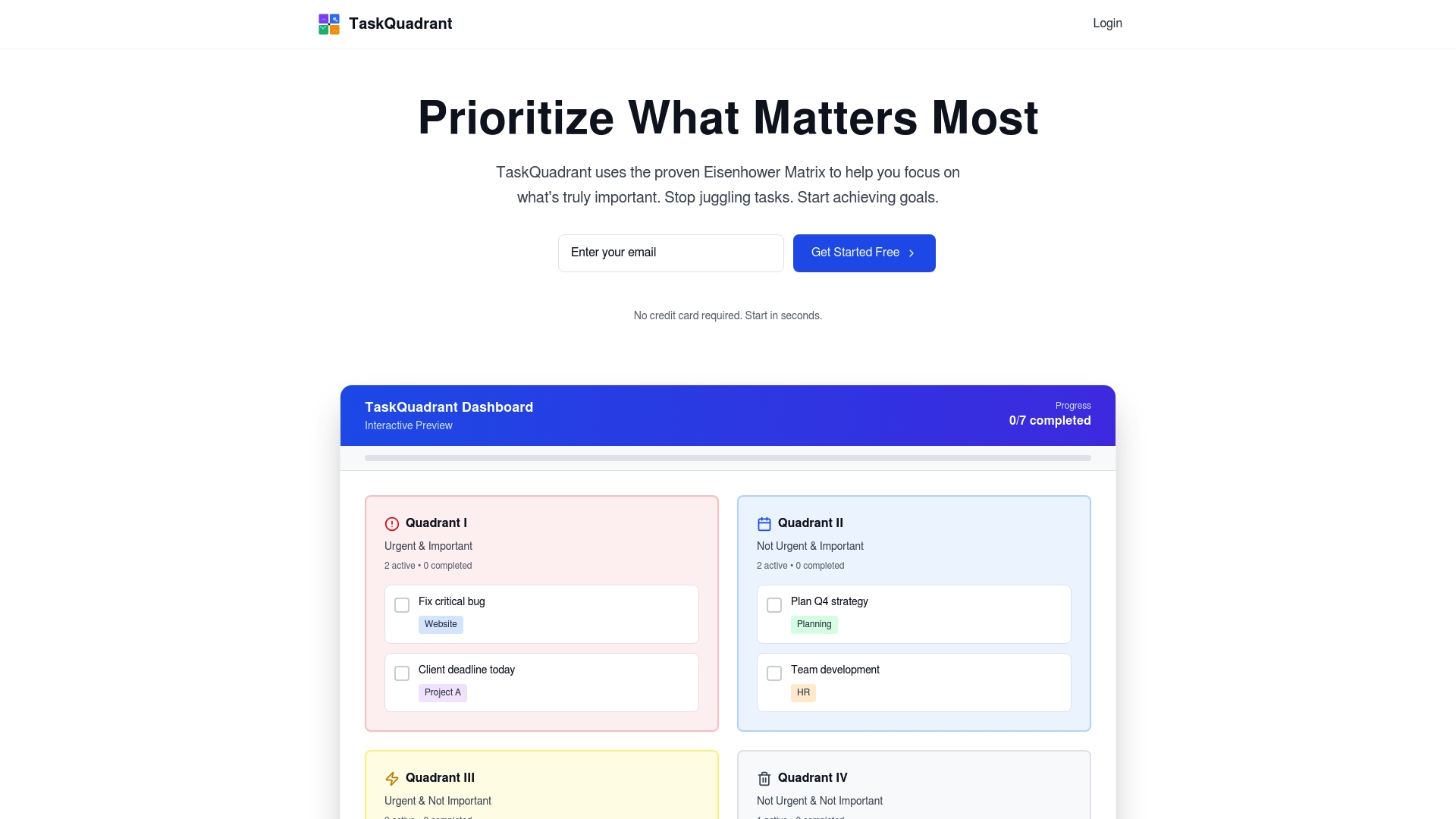
Discover how to transform your recurring task strategy today. Visit TaskQuadrant to start your free plan and unlock professional tools that streamline task management and elevate productivity. Don’t wait until recurring tasks slow your team down, take control now with advanced features and easy onboarding designed for immediate impact.
Frequently Asked Questions
What are recurring tasks?
Recurring tasks are systematic activities scheduled to repeat at consistent intervals, allowing for predictable and automated processes in professional workflows.
How can recurring tasks improve productivity?
By eliminating the need for manual rescheduling and reducing administrative overhead, recurring tasks enable professionals to focus on strategic execution rather than repetitive task recreation.
What types of recurring tasks are there?
The main types include fixed-interval tasks, flexible-schedule tasks, and context-dependent tasks, each serving unique organizational productivity needs.
How does recurring task automation work?
Recurring task automation relies on predefined rules and algorithms to schedule tasks to regenerate automatically, adapting to real-time project conditions and ensuring tasks remain relevant and timely.
Leave a Reply