
Over seventy percent of American professionals report losing valuable work hours each week due to poor task organization. With rising demands in the modern workplace, finding efficient ways to manage daily tasks is no longer optional. Mastering task management creates a clear structure for progress and productivity, helping American teams and individuals achieve goals while minimizing stress and wasted effort.
Table of Contents
- Defining Task Management and Its Role
- Types of Task Management Systems Explained
- Core Features and How Task Tools Work
- Benefits for Productivity and Goal Achievement
- Risks of Poor Task Management Practices
Key Takeaways
| Point | Details |
|---|---|
| Effective Task Management | Task management is essential for translating professional objectives into actionable steps, improving clarity and focus. |
| Types of Systems | Modern task management systems include basic, project management, collaborative, and advanced matrix-based options tailored to different organizational needs. |
| Core Features | Effective tools provide task detailing, priority management, collaboration capabilities, and reporting to enhance productivity. |
| Risks of Ineffectiveness | Poor task management can lead to operational inefficiencies, psychological impacts, financial consequences, and jeopardize organizational sustainability. |
Defining Task Management and Its Role
Task management represents the strategic process of planning, tracking, and executing work activities to achieve specific goals efficiently. At its core, task management involves overseeing tasks through their entire lifecycle, which includes critical phases like planning, testing, tracking, and reporting. This systematic approach enables professionals to transform complex workflows into manageable, actionable steps.
The fundamental purpose of task management extends beyond mere organization. It serves as a critical framework for translating professional objectives into concrete actions. By breaking down larger projects into smaller, trackable tasks, individuals can maintain clarity, prioritize effectively, and monitor progress with precision. Management fundamentally coordinates human, material, and information resources within an organizational environment, ensuring that every effort contributes meaningfully toward overarching goals.
Successful task management requires several key components. These typically include:
- Precise task definition and scope
- Clear priority assignments
- Realistic time estimates
- Resource allocation tracking
- Progress monitoring mechanisms
- Adaptable workflow strategies
Pro Tip: Systematic Approach: Dedicate 10 minutes each morning to review and prioritize your tasks using a structured method like the Eisenhower Matrix, which helps distinguish between urgent and important work priorities.
Types of Task Management Systems Explained
Task management systems represent sophisticated digital platforms designed to transform how professionals organize and execute work. These digital platforms help individuals and teams organize, prioritize, and track tasks and projects, offering a structured approach to workflow management that goes beyond traditional to-do lists.
Modern task management systems can be categorized into several key types, each addressing unique organizational needs:
- Basic List-Based Systems
- Simple digital checklists
- Linear task tracking
- Best for individual users
- Limited collaboration features
- Project Management Platforms
- Complex workflow tracking
- Team collaboration tools
- Resource allocation features
- Gantt chart visualizations
- Collaborative Digital Workspaces
- Multi-user task coordination platforms
- Real-time communication integration
- Shared task assignments
- Progress tracking across teams
- Advanced Matrix-Based Systems
- Priority-driven task categorization
- Quadrant-based organization
- Strategic importance mapping
- Automated workflow suggestions
Pro Tip: System Selection Strategy: Evaluate your specific workflow requirements and team size before selecting a task management system, focusing on scalability and integration capabilities rather than just feature count.
Here is a comparison of key types of task management systems based on collaboration, complexity, and ideal user fit:
| System Type | Collaboration Level | Workflow Complexity Support | Ideal User Profile |
|---|---|---|---|
| Basic List-Based Systems | Individual only | Simple tasks | Solo professionals |
| Project Management Platforms | Team collaboration | Complex, multi-phase | Project managers, teams |
| Collaborative Digital Workspaces | Real-time group | Flexible, cross-team | Remote or hybrid teams |
| Advanced Matrix-Based Systems | Strategic alignment | Prioritization-intensive | Executives, planners |
Core Features and How Task Tools Work
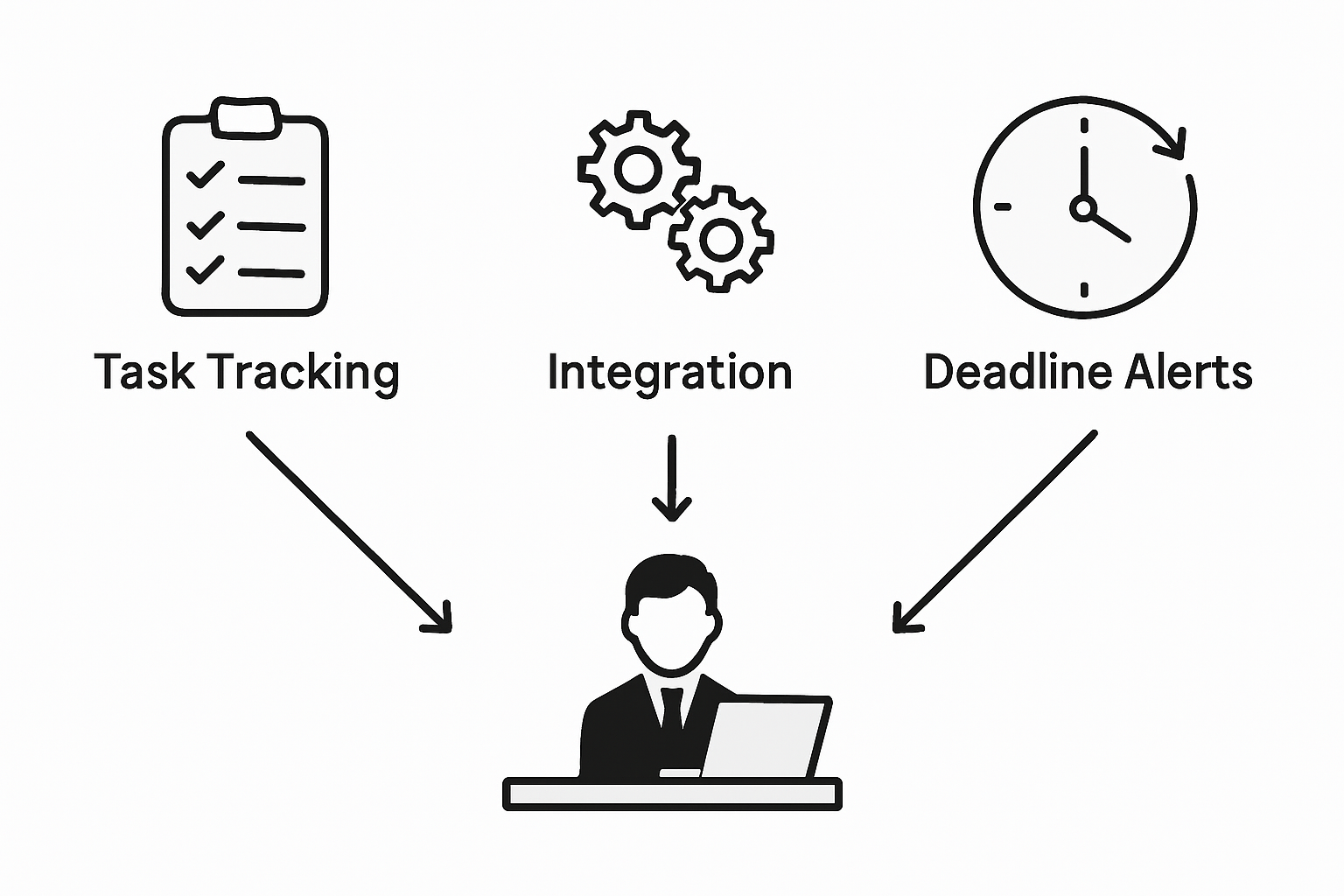
Task management tools represent sophisticated digital solutions designed to streamline professional workflows. These systems enable comprehensive task creation, prioritization, and assignment, transforming complex work environments into manageable, structured processes.
At their core, modern task management platforms include several critical features that distinguish them from basic to-do list applications:
- Task Creation and Detail Mapping
- Comprehensive task description fields
- Attachment capabilities
- Subtask breakdown
- Context and metadata tracking
- Priority and Urgency Management
- Color-coded urgency indicators
- Quadrant-based prioritization
- Dynamic reranking abilities
- Automated deadline tracking
- Collaboration and Communication
- Multi-user task coordination capabilities
- Real-time commenting
- Team member assignment
- Notification and alert systems
- Reporting and Analytics
- Performance visualization
- Productivity metrics
- Completion rate tracking
- Resource utilization insights
Pro Tip: Feature Selection Strategy: Prioritize task management tools that offer flexible customization and integrate seamlessly with your existing workflow, rather than forcing your team to adapt to rigid system constraints.
Below is a summary of core feature groups in modern task management tools and their business impact:
| Feature Group | Example Capability | Business Impact |
|---|---|---|
| Task Detailing | Subtask breakdown | Enables precise accountability |
| Priority Management | Color-coded indicators | Improves focus on urgent deliverables |
| Collaboration | Real-time commenting | Reduces miscommunication across teams |
| Reporting & Analytics | Productivity metrics | Measures and drives performance gains |
Benefits for Productivity and Goal Achievement
Effective task management transforms professional performance by creating structured pathways to achievement. Professional success depends critically on developing robust task management skills that contribute to leadership, ethical behavior, and problem-solving capabilities, enabling individuals to navigate complex work environments with precision and confidence.
The productivity benefits of systematic task management extend far beyond simple organization. Research reveals fascinating insights into how structured task approaches impact work performance:
- Motivation Enhancement
- Clarity of objectives
- Visible progress tracking
- Reduced cognitive overwhelm
- Increased sense of accomplishment
- Performance Optimization
- Strategic priority alignment
- Efficient resource allocation
- Minimized procrastination
- Accelerated goal completion
- Psychological Advantages
- Improved work effort through peer interaction
- Reduced decision fatigue
- Enhanced work engagement
- Lower stress levels
- Strategic Workflow Management
- Predictable work patterns
- Proactive problem identification
- Continuous improvement mechanisms
- Systematic goal decomposition
Pro Tip: Performance Optimization: Schedule a weekly 30-minute review session to reassess your task priorities, identifying completed achievements and recalibrating upcoming objectives for maximum productivity.

Risks of Poor Task Management Practices
Ineffective task management represents a critical vulnerability for professionals and organizations, creating cascading challenges that compromise productivity and operational effectiveness. Without systematic approaches to task decomposition and allocation, organizations risk significant inefficiencies in job execution and resource management, potentially undermining entire workflow structures.
The multifaceted risks of poor task management manifest across several critical dimensions:
- Operational Inefficiencies
- Redundant work efforts
- Missed deadlines
- Resource misallocation
- Increased operational costs
- Psychological Impact
- Elevated stress levels
- Reduced workplace motivation
- Decision fatigue
- Diminished professional confidence
- Financial Consequences
- Productivity losses
- Potential revenue reduction
- Increased overhead expenses
- Competitive disadvantage
- Organizational Sustainability
- Compromised economic performance through suboptimal human capital management
- Weakened strategic alignment
- Reduced adaptability
- Impaired long-term growth potential
Pro Tip: Risk Mitigation Strategy: Implement a quarterly task management audit to systematically identify workflow bottlenecks, reassess task allocation strategies, and proactively address potential inefficiencies before they escalate.
Boost Your Productivity with Smart Task Management
Busy professionals face the challenge of managing multiple tasks with varying urgency and importance while avoiding overwhelm and inefficiency. This article highlights the critical role of structured task management and the Eisenhower Matrix in clarifying priorities and reducing decision fatigue. If you struggle to keep track of deadlines, delegate effectively, or maintain focus on what truly matters, TaskQuadrant.io offers the perfect solution.
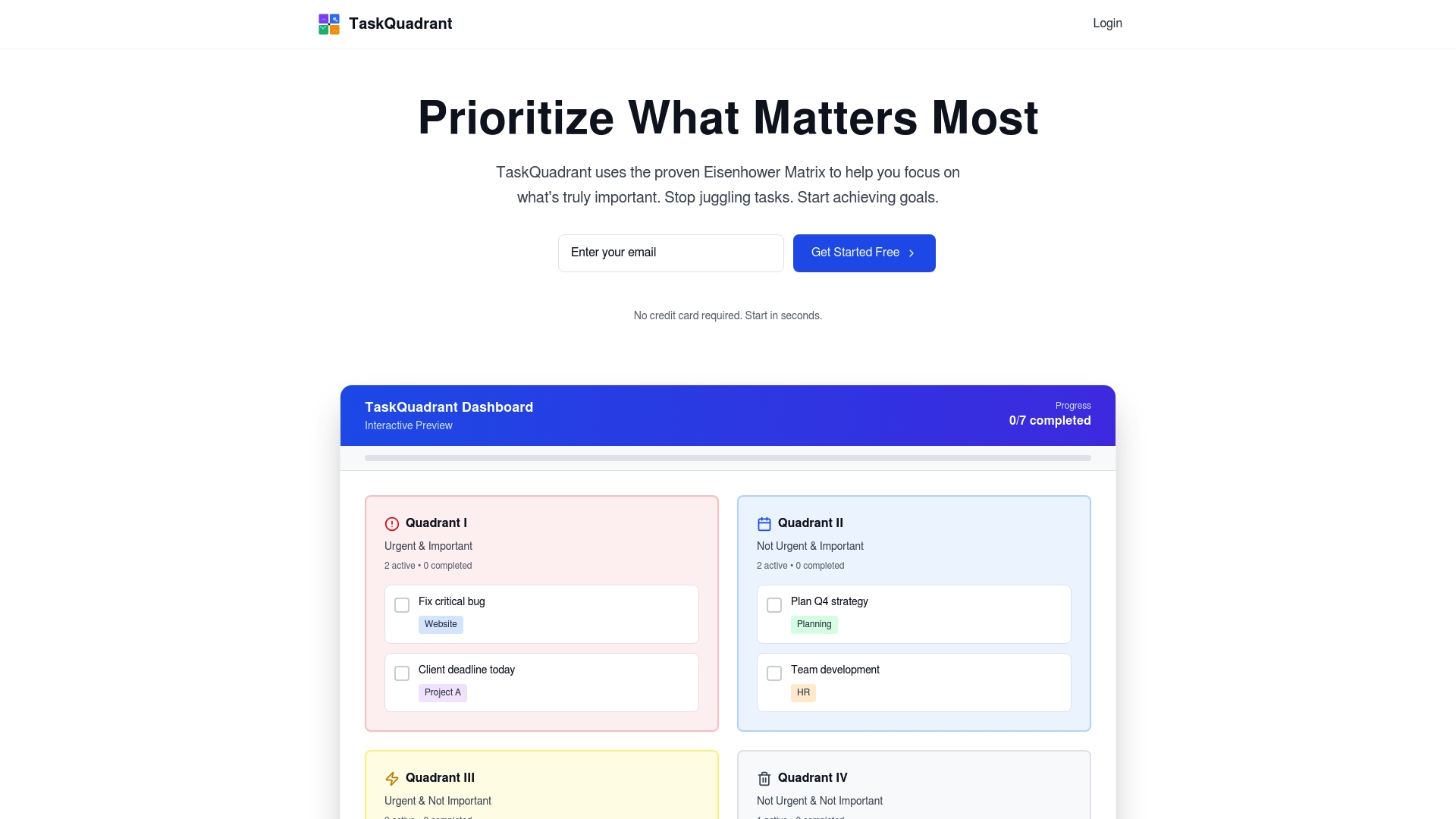
Discover how TaskQuadrant.io helps you break down your workload into actionable priorities by automatically categorizing tasks into four distinct quadrants based on urgency and importance. Enjoy seamless task creation whether by manual input or visual mind maps, plus real-time progress tracking through intuitive dashboards and powerful project timeline tools like Gantt charts. Start achieving your goals faster while minimizing stress and boosting your team’s collaboration. Visit TaskQuadrant.io today and transform your task management approach into a productivity powerhouse. Learn more about the importance of task prioritization and why thousands of professionals trust our platform for smarter work organizing.
Frequently Asked Questions
What is task management and why is it important for busy professionals?
Task management is the strategic process of planning, tracking, and executing work activities to achieve specific goals efficiently. It is vital for busy professionals as it helps break larger projects into manageable tasks, allowing for better organization, priority setting, and progress monitoring.
What are the key components of effective task management?
Effective task management includes precise task definition, clear priority assignments, realistic time estimates, resource allocation tracking, progress monitoring mechanisms, and adaptable workflow strategies.
How can task management systems improve productivity?
Task management systems streamline workflows by enabling better task prioritization, collaboration among team members, and effective tracking of progress. This leads to enhanced focus on urgent deliverables, minimized procrastination, and accelerated goal completion.
What are the risks of poor task management practices?
Poor task management practices can lead to operational inefficiencies, elevated stress levels, financial losses, and compromised organizational sustainability. Without systematic approaches, professionals may struggle with deadlines, resource misallocation, and overall productivity.
Leave a Reply