
Most American professionals spend nearly half their workday on unplanned tasks, losing valuable time and focus. When demands constantly pile up, it becomes challenging to keep projects on track. With clear strategies for defining objectives, prioritizing work, and tracking progress, anyone can cut the clutter and reclaim hours each week. This practical guide shows how to build a streamlined system that boosts productivity and empowers every American worker to achieve better results.
Table of Contents
- Step 1: Define Key Tasks And Objectives
- Step 2: Prioritize Activities Using The Eisenhower Matrix
- Step 3: Organize Tasks With Intuitive Workflows
- Step 4: Track Progress With Visual Dashboards
- Step 5: Review And Optimize Your Task Process
Quick Summary
| Key Insight | Explanation |
|---|---|
| 1. Define SMART objectives | Use Specific, Measurable, Achievable, Relevant, and Time-bound goals to create actionable targets and track progress. |
| 2. Utilize the Eisenhower Matrix | Categorize tasks by urgency and importance to prioritize effectively and focus on high-impact activities. |
| 3. Create intuitive workflows | Design workflows that streamline processes and reduce complexity to enhance productivity and minimize bottlenecks. |
| 4. Implement visual dashboards | Develop dashboards that provide real-time updates on task progress, using visual indicators for clarity and efficiency. |
| 5. Commit to continuous improvement | Regularly review and optimize your task management practices using the Plan-Do-Check-Act cycle to eliminate inefficiencies. |
Step 1: Define key tasks and objectives
Defining key tasks and objectives is the foundational blueprint for successful productivity. By creating clear, strategic targets, you transform abstract goals into actionable roadmaps that guide your work and measure progress.
Start by adopting the SMART criteria framework for setting objectives that are Specific, Measurable, Achievable, Relevant, and Time-bound. This approach ensures your goals are not just wishful thinking but concrete, trackable targets. For instance, instead of saying “I want to improve my work performance,” frame it as “I will increase my project completion rate by 20% over the next quarter by implementing structured daily planning.”
To systematically approach task definition, leverage Management by Objectives principles which recommend aligning individual goals with broader organizational or personal outcomes. Break down larger objectives into smaller, manageable tasks. Ask yourself key questions like: What exactly needs to be accomplished? What specific actions will move me closer to this goal? What metrics will demonstrate successful completion?
Pro tip: Always include a timeline and specific success indicators for each task. Vague objectives lead to scattered efforts, while precise targets create focused momentum.
With your key tasks and objectives clearly defined, you are now ready to move into prioritization and strategic planning.
Step 2: Prioritize activities using the Eisenhower Matrix
The Eisenhower Matrix transforms how you approach task management by providing a strategic framework for evaluating and organizing your workload. This powerful time management tool helps you distinguish between tasks that truly matter and those that merely consume your energy.

To effectively use the matrix, divide your tasks into four distinct quadrants based on their urgency and importance. Quadrant 1 contains critical and time-sensitive tasks that require immediate attention. Quadrant 2 focuses on important but not urgent activities like strategic planning and personal development. Quadrant 3 includes urgent but less important tasks that often feel pressing but can be delegated. Quadrant 4 captures low-priority tasks that should be minimized or eliminated.
When applying the decision matrix approach, systematically evaluate each task by asking two key questions: How urgent is this task? How important is this task to my overall goals? By consistently applying this method, you will reduce decision fatigue, focus on high-impact activities, and create a more intentional workflow.
Pro tip: Spend 80% of your time in Quadrant 2 activities to proactively manage your goals and prevent future emergencies.
With your tasks now strategically prioritized, you are prepared to move forward with focused and purposeful execution.
Step 3: Organize tasks with intuitive workflows
Creating intuitive workflows transforms chaos into systematic productivity. Your goal is to design a workflow process that moves tasks seamlessly from initiation to completion, eliminating unnecessary complexity and maximizing efficiency.
Start by mapping out your typical task sequence using visual techniques like flowcharts or mind maps. Identify natural progression points and potential bottlenecks in your current approach. When applying business process modeling principles, focus on creating logical connections between tasks that minimize cognitive load and streamline decision making. Group similar activities together, establish clear handoff points, and create consistent triggers that automatically move tasks through different stages of completion.
Break down complex projects into modular components with defined input and output requirements. This approach allows you to create repeatable systems that can be easily adjusted and scaled as your workload or priorities change. Implement clear status indicators or color coding to quickly communicate task progress and reduce communication overhead.
Pro tip: Review and optimize your workflow quarterly to ensure it continues meeting your evolving productivity needs.
With an intuitive workflow in place, you are now prepared to track and monitor your task progression systematically.
Step 4: Track progress with visual dashboards
Visual dashboards transform abstract performance data into actionable insights. Your goal is to create a business dashboard) that provides an instant snapshot of your task progress, enabling quick decision making and strategic adjustments.
Design your dashboard to highlight key performance indicators that matter most to your workflow. Focus on metrics that directly reflect task completion rates, time investment, and overall productivity. Use color coding to create immediate visual recognition colors like green for completed tasks, yellow for in progress, and red for overdue activities. Incorporate graphical representations such as progress bars, pie charts, and trend lines that quickly communicate your advancement toward project goals.
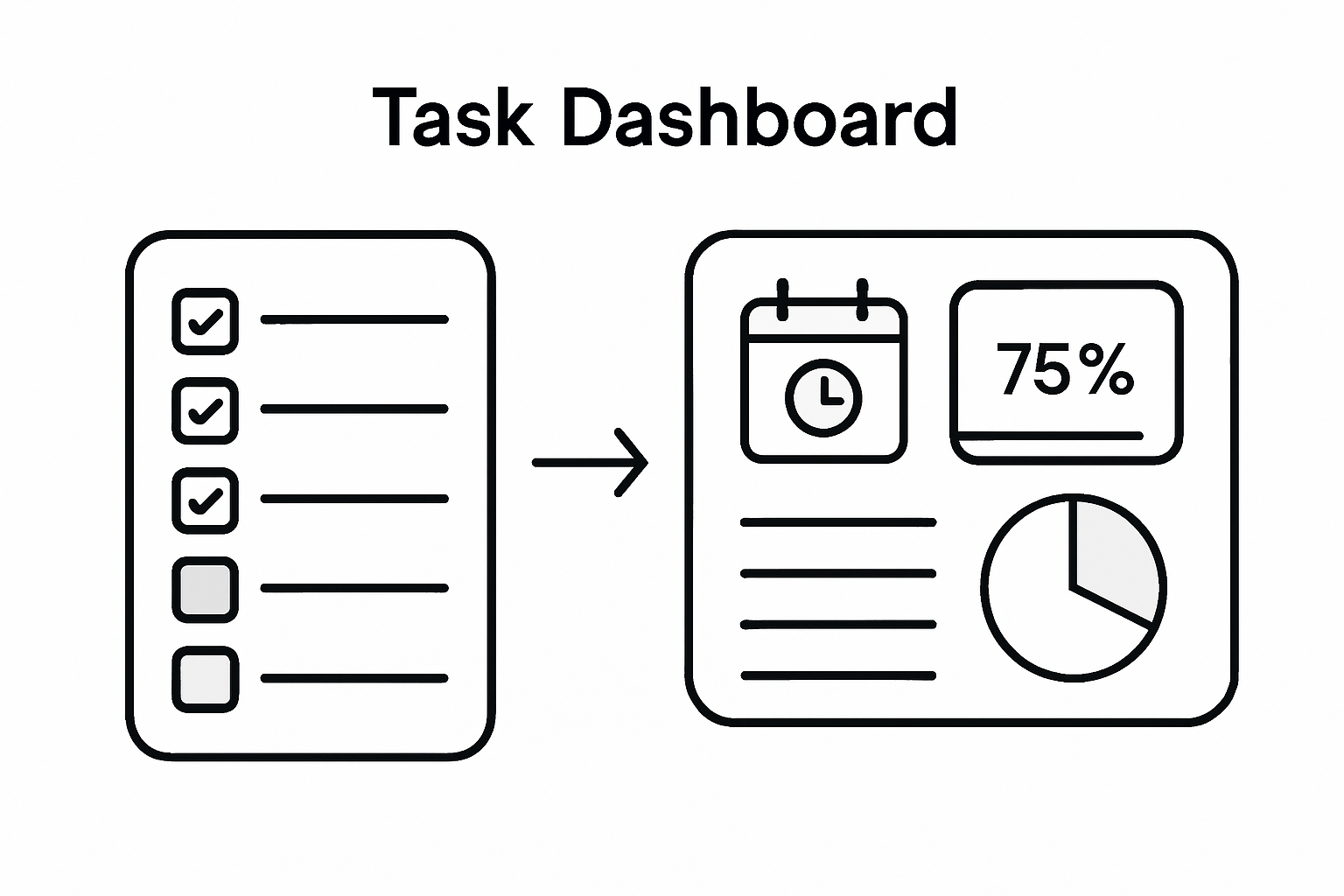
Implement real time tracking mechanisms that update automatically, reducing manual data entry and providing continuous visibility into your work patterns. Configure your dashboard to show both micro level task details and macro level project progression, allowing you to zoom in and out of your performance landscape. Customize view settings to match your specific work style and information processing preferences.
Pro tip: Review your dashboard weekly to identify productivity trends and potential optimization opportunities.
With a comprehensive visual tracking system in place, you are now equipped to analyze and improve your task management strategy continuously.
Step 5: Review and optimize your task process
Optimizing your task management approach is an ongoing journey of incremental improvements. Your goal is to implement a continuous improvement process that systematically identifies and eliminates inefficiencies in your workflow.
Adopt the Plan-Do-Check-Act cycle as your primary optimization framework. In the planning phase, analyze your current task management performance and identify specific areas for enhancement. During the execution phase, implement targeted changes and carefully monitor their impact. The checking phase involves rigorous assessment of these modifications comparing actual results against expected outcomes. Finally, in the action phase, standardize successful improvements or reset and retry alternative strategies.
Create a monthly review ritual where you critically examine your productivity metrics. Look for patterns in task completion times, identify recurring bottlenecks, and assess the effectiveness of your current prioritization methods. Pay special attention to tasks that consistently get delayed or consume more time than anticipated. Consider experimenting with different techniques like time blocking, batching similar tasks, or adjusting your working environment to support more efficient work patterns.
Pro tip: Treat your task management system as a living document that evolves with your changing professional demands.
By committing to continuous refinement, you transform task management from a static process into a dynamic, adaptive strategy that grows alongside your professional capabilities.
Take Control of Your Productivity with Smart Task Management
Managing tasks effectively and prioritizing with clarity can be overwhelming. The article highlights the struggle to define clear objectives, prioritize using the Eisenhower Matrix, and track progress visually to avoid scattered focus and decision fatigue. If you want to move beyond theory and empower your productivity with a proven system that organizes your workload intuitively, TaskQuadrant.io offers exactly that. Our platform brings the Eisenhower Matrix to life by automatically sorting your tasks by urgency and importance, helping you focus on what truly matters.
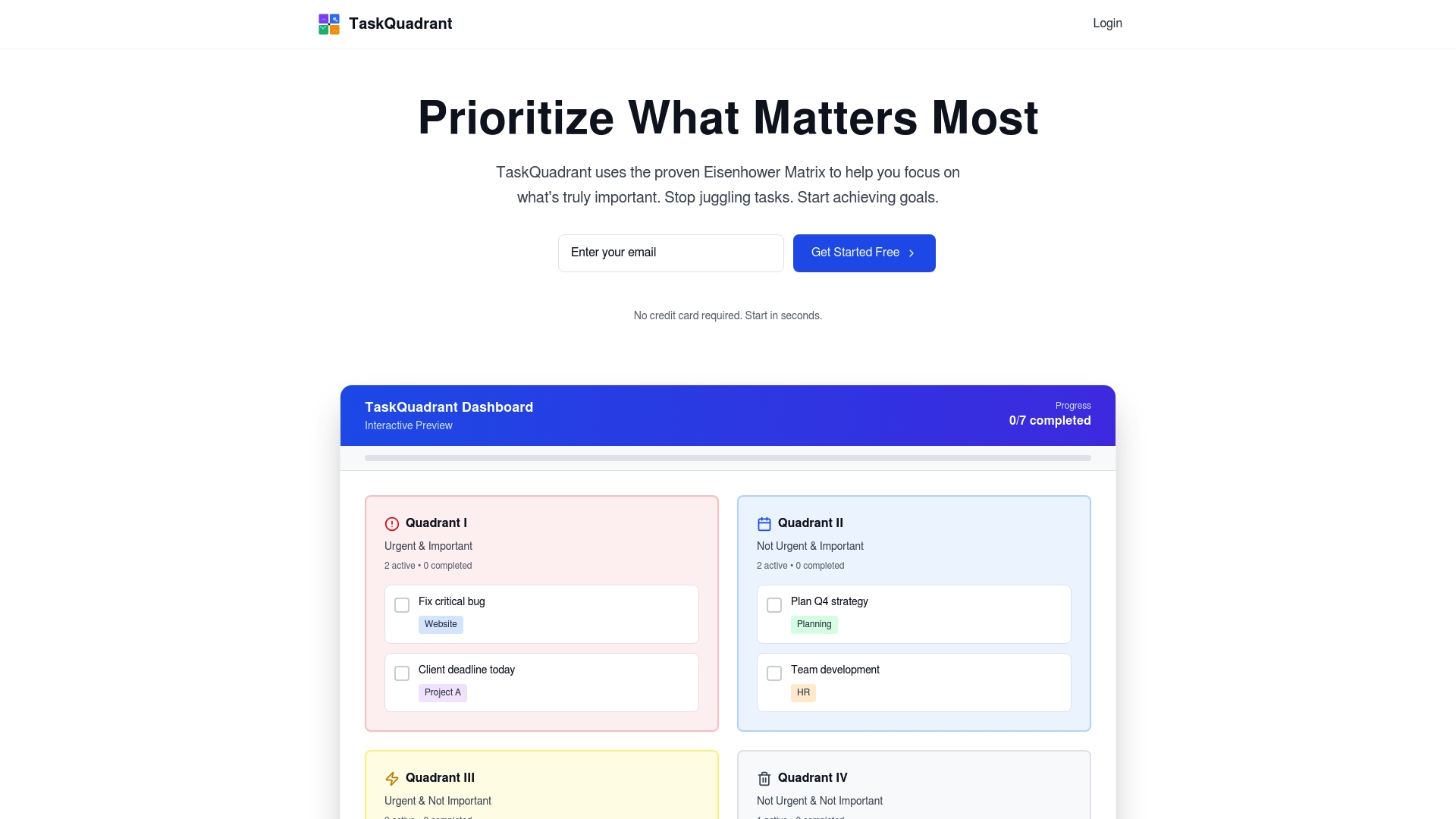
Start transforming your task management today by visiting TaskQuadrant.io. See how easy it is to set SMART goals, create visual workflows, and track progress on dynamic dashboards. The longer you wait, the more decision fatigue grows. Take the first step to regain control and boost your productivity now.
Frequently Asked Questions
How can I define key tasks and objectives for better productivity?
To define key tasks and objectives, start by using the SMART criteria: make your goals Specific, Measurable, Achievable, Relevant, and Time-bound. Transform vague ambitions into concrete targets, like increasing your project completion rate by 20% over the next quarter.
What is the Eisenhower Matrix and how can it help prioritize tasks?
The Eisenhower Matrix is a time management tool that helps you categorize tasks based on urgency and importance. Divide your tasks into four quadrants to focus on critical activities while delegating or minimizing less important ones, ensuring you spend about 80% of your time on Quadrant 2 tasks.
How do I create an intuitive workflow for managing tasks?
To create an intuitive workflow, map out the sequence of your typical tasks using flowcharts or mind maps. Organize tasks logically and break larger projects into manageable steps to streamline decision-making and reduce complexity.
What should I include in a visual dashboard for tracking task progress?
A visual dashboard should highlight key performance indicators that reflect task completion rates and overall productivity. Use color coding and graphical representations like progress bars to quickly communicate status and make adjustments as necessary.
How can I implement continuous improvement in my task management process?
To implement continuous improvement, follow the Plan-Do-Check-Act cycle: analyze your current performance and implement changes, then assess their impact. Set aside time monthly to review productivity metrics and identify areas for enhancement, aiming for incremental improvements.
Leave a Reply